Hydration & Exercise HR

Nolan O'Connor
| 03-09-2026
 · Science Team
Exercise increases the body's need for oxygen, blood flow, and temperature regulation. Adequate hydration helps support these processes during physical activity by maintaining appropriate fluid balance.
When substantial fluid is lost through sweating, cardiovascular strain can increase. As a result, heart rate may rise during exercise, particularly during prolonged activity or exposure to hot conditions.
Why Hydration Matters
Water contributes to blood volume and helps the body regulate temperature. Exercise increases heat production, while sweating provides an important mechanism for cooling the body.
When fluid losses are not adequately replaced, circulating blood volume can decline. The cardiovascular system may then need to work harder to maintain blood flow and support temperature regulation.
Dehydration and Heart Rate
Dehydration can increase cardiovascular strain during exercise. With reduced circulating blood volume, the heart may beat faster to help maintain adequate blood flow.
“Hypohydration leads to increased cardiovascular stress during exercise.” — National Athletic Trainers’ Association.
This can cause heart rate to become higher than expected for a given exercise intensity. Exercise may also feel more difficult as dehydration becomes more pronounced.
The effect varies between individuals and depends on factors such as exercise intensity, duration, environmental temperature, humidity, fitness level, acclimatization, and individual sweat rate.
Recognizing Possible Dehydration
Possible signs of inadequate hydration during exercise include:
- Increased thirst
- Dry mouth
- Fatigue
- Headache
- Dizziness or lightheadedness
- Reduced exercise tolerance
An unexpectedly elevated heart rate can occur with dehydration, but it is not specific to fluid loss. Exercise intensity, heat, and other physiological factors can also increase heart rate.
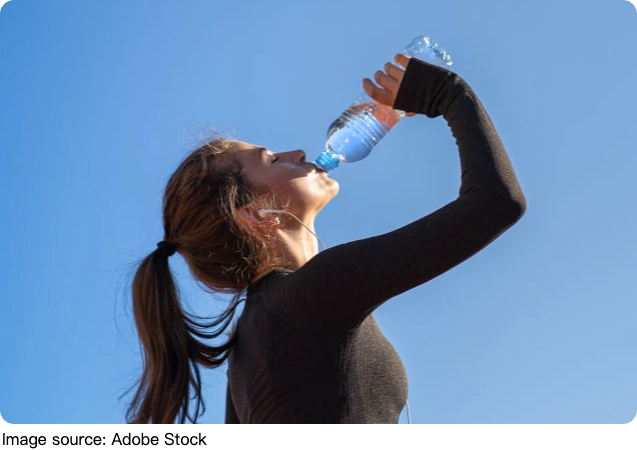
Hydration Before, During, and After Exercise
Starting exercise adequately hydrated provides the body with an appropriate fluid baseline before sweating begins.
During prolonged or demanding exercise, drinking fluids at appropriate intervals can help replace some of the water lost through sweating. Fluid requirements vary according to individual sweat rate, exercise duration, exercise intensity, and environmental conditions.
After exercise, replacing substantial fluid losses can help restore normal hydration. Following prolonged activity involving considerable sweating, electrolyte replacement may also be appropriate because sweat contains sodium and other electrolytes.
Choosing Fluids During Exercise
For many routine workouts, water is sufficient. Longer sessions involving considerable sweating may increase the need for fluids containing electrolytes.
The objective is to maintain appropriate hydration rather than consume excessive amounts of fluid. Individual fluid needs differ, so hydration strategies should reflect actual fluid losses and exercise demands.
Exercise in Hot Conditions
Heat and humidity can increase sweating and place additional demands on the cardiovascular system. Under these conditions, dehydration can contribute to greater cardiovascular strain during exercise.
Adjusting exercise intensity, taking appropriate breaks, and maintaining adequate fluid intake can help support temperature regulation and cardiovascular function.
When Medical Attention Is Needed
Exercise should be stopped if concerning symptoms such as severe dizziness, confusion, fainting, chest discomfort, difficulty breathing, or unusual weakness occur.
These symptoms should not automatically be attributed to dehydration because several medical conditions can produce similar signs. Prompt medical evaluation is appropriate when symptoms are severe, persistent, or unusual.
Individuals with conditions or treatments that affect fluid or electrolyte balance should obtain personalized medical guidance about exercise hydration.
Practical Hydration Habits
- Start exercise adequately hydrated.
- Keep fluids available during longer workouts.
- Consider temperature and humidity when planning fluid intake.
- Pay attention to thirst, sweating, fatigue, and exercise tolerance.
- Replace substantial fluid losses after prolonged activity.
- Consider electrolyte replacement during prolonged exercise with heavy sweating.
- Avoid using a fixed hydration target for every workout.
Hydration plays an important role in maintaining cardiovascular function during exercise. Significant fluid loss can reduce circulating blood volume, increase cardiovascular strain, and contribute to a higher heart rate at the same level of physical effort.
Maintaining appropriate hydration before, during, and after exercise can support temperature regulation and exercise tolerance. The most suitable approach depends on exercise duration, intensity, environmental conditions, sweating, and individual fluid requirements.