Cars That Talk

Chris Isidore
| 28-11-2025
 · Vehicle Team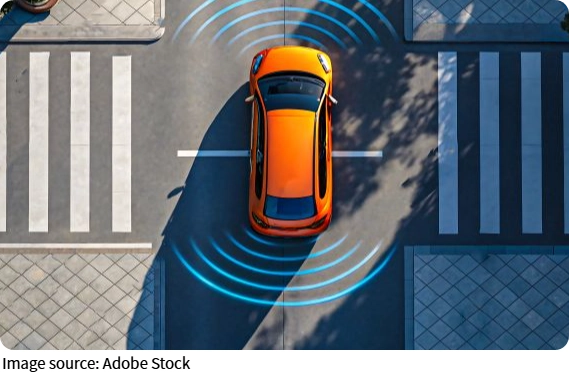
Imagine you're driving through a busy intersection, and your car automatically slows down—not because you saw a red light, but because it received a signal from a pedestrian's smartphone that someone is crossing the street.
That's the power of V2X technology, or Vehicle-to-Everything communication.
V2X allows vehicles to exchange real-time information with the environment around them, including other vehicles (V2V), infrastructure (V2I), networks (V2N), pedestrians (V2P), and even the grid (V2G). This emerging technology is set to transform road safety, traffic management, and the future of autonomous vehicles. But how exactly does it work? And how close are we to seeing this system on everyday roads?
The Components of V2X
To better understand the scope of V2X, let's break down its main components:
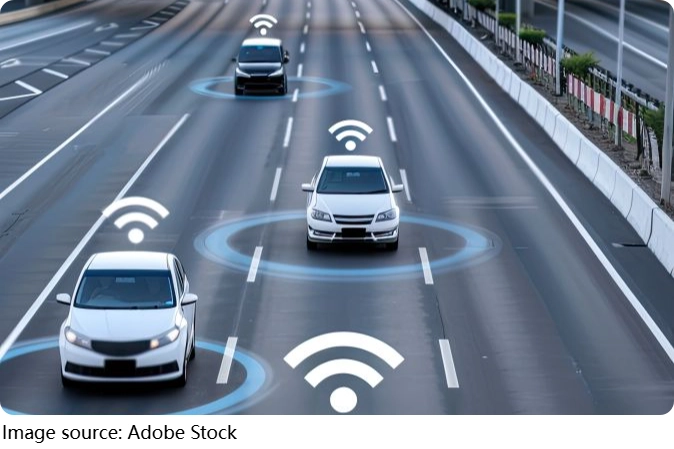
• V2V (Vehicle-to-Vehicle): Cars share information about speed, position, and direction to avoid collisions or pileups.
• V2I (Vehicle-to-Infrastructure): Vehicles receive updates from traffic lights, road signs, and sensors about traffic conditions or hazards.
• V2N (Vehicle-to-Network): Cars connect to cellular networks or cloud servers to access broader traffic data and real-time navigation updates.
• V2P (Vehicle-to-Pedestrian): Vehicles can detect signals from nearby smartphones or wearable devices, helping to prevent pedestrian accidents.
• V2G (Vehicle-to-Grid): Electric vehicles communicate with power grids to manage energy flow, charge scheduling, and grid balance.
Each of these layers contributes to a more intelligent and responsive driving ecosystem.
How Does V2X Work?
At its core, V2X relies on wireless communication protocols. Two main technologies power these interactions:
• DSRC (Dedicated Short Range Communications): A Wi-Fi-based protocol that enables rapid data exchange between nearby devices.
• C-V2X (Cellular Vehicle-to-Everything): Uses existing 4G LTE or emerging 5G networks to enable more scalable and long-range communication.
For instance, if a car equipped with C-V2X approaches a construction zone, it can receive a warning from the road infrastructure via cellular network. At the same time, it may also "talk" to other nearby vehicles to coordinate speed and prevent sudden stops.
Safety First: V2X as a Life Saver
Many of the road accidents are caused by human error. V2X is being hailed as a potential game-changer in reducing these errors.
• Collision Avoidance: If two vehicles are on a collision course, V2V communication can alert drivers or even initiate emergency braking.
• Blind Spot Detection: Cars can communicate with one another to warn drivers of vehicles in their blind spots.
• Emergency Alerts: If an ambulance is approaching from behind, it can send out a V2X signal to alert nearby drivers to yield.
Real-World Applications Already in Motion
Several cities and automakers are already testing or implementing V2X systems:
• Audi's Traffic Light Information system tells drivers when lights will change, reducing idle time and fuel use.
• Ford and Qualcomm have tested C-V2X technology on roads in Michigan to prove real-world feasibility.
• Europe's C-ITS Corridor links infrastructure and vehicles across several countries to enable seamless cross-border communication.
These early examples are paving the way for larger rollouts in the near future.
Role in Autonomous Driving
Autonomous vehicles rely on sensors like LiDAR, radar, and cameras. But those have limitations—bad weather, blind curves, and line-of-sight issues can affect performance. V2X acts as an "extra layer of vision," helping autonomous systems receive information from far beyond their physical surroundings.
For example, a self-driving car can be informed about an accident several miles ahead or road construction around a bend, allowing it to reroute or adjust speed in advance. This makes the system more predictive and less reactive.
Challenges to Widespread Adoption
Despite its promise, V2X faces significant barriers:
• Infrastructure Investment: Upgrading roads, traffic signals, and cellular networks to support V2X communication will require massive investment.
• Standardization: Competing protocols (DSRC vs. C-V2X) may delay global interoperability.
• Privacy Concerns: Critics argue that constant vehicle tracking could be used to collect personal data or monitor movement patterns.
• Automaker Commitment: Not all manufacturers are currently on board. While companies like Toyota and General Motors are investing in V2X, others remain cautious.
Environmental and Traffic Benefits
Besides safety, V2X offers environmental and urban benefits:
• Smoother Traffic Flow: Real-time communication reduces unnecessary stops and sudden acceleration, lowering fuel consumption.
• Green Wave Coordination: V2I can optimize traffic light timing to allow groups of vehicles to pass through multiple intersections without stopping.
• Reduced Congestion: Network-wide awareness enables smarter rerouting and use of side roads, decreasing traffic jams.
All of these features make driving less stressful and more eco-friendly.
What Does the Future Hold?
By 2030, analysts expect that most new vehicles will be equipped with some form of V2X technology. Governments are already laying the groundwork—Japan has deployed thousands of V2X-equipped intersections, and the European Union has passed legislation promoting intelligent transport systems.
The next step is mass rollout. Once enough vehicles, infrastructure, and devices are V2X-compatible, we could see a major leap in how transportation systems operate.
Would You Trust a Car That Talks?
The idea of cars "talking" to each other and the world around them may feel futuristic—but it's already beginning. As automakers, cities, and technology firms collaborate, V2X stands to reshape not just how we drive, but how we experience mobility as a whole.
So, would you trust your car to make decisions based on real-time conversations with the road and everything on it? Let us know—are you ready for cars that communicate?